Last Updated: September 2026
Deck landscaping can help connect a deck with the rest of your garden while adding colour, greenery, shade and privacy to your outdoor space.
When landscaping around a deck in Brisbane, it’s important to think beyond appearance. Plant size, sunlight, drainage, maintenance, airflow and Queensland’s weather can all affect which landscaping choices work well.
In this guide, we’ll look at deck landscaping ideas for Brisbane homes, including plants, pots, privacy screens and garden layouts, as well as some common mistakes to avoid when landscaping around a deck.
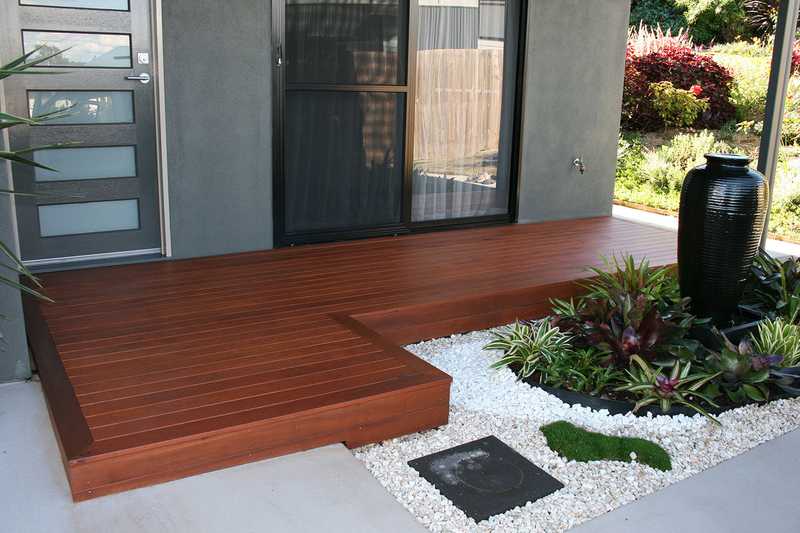
Deck landscaping is the process of designing the plants, garden beds, pots, screening, pathways and other outdoor features around a deck so the deck connects naturally with the surrounding property. Landscaping can be used for several purposes:
A deck garden needs to work with the local environment. You’ll need to consider adding drainage, irrigation, and be ready to maintain the garden (or budget to hire a gardener). When choosing plants, make sure each species can handle Queensland’s:
One of the most commonly overlooked aspects of timber deck landscaping is fragrance. By carefully designing your landscaping, you can enjoy relaxing scents year-round.
The positioning of your fragrant flowers is very important. The direction of the wind often plays an important role here.
You should have an idea of what you want to achieve with the fragrances. For example, if you’d like an intense aromatic experience near the outdoor dining table, you may want to position fragrant flowers such as jasmine close by. If you are going for a more subtle experience, you can add distance between the fragrances and your deck.
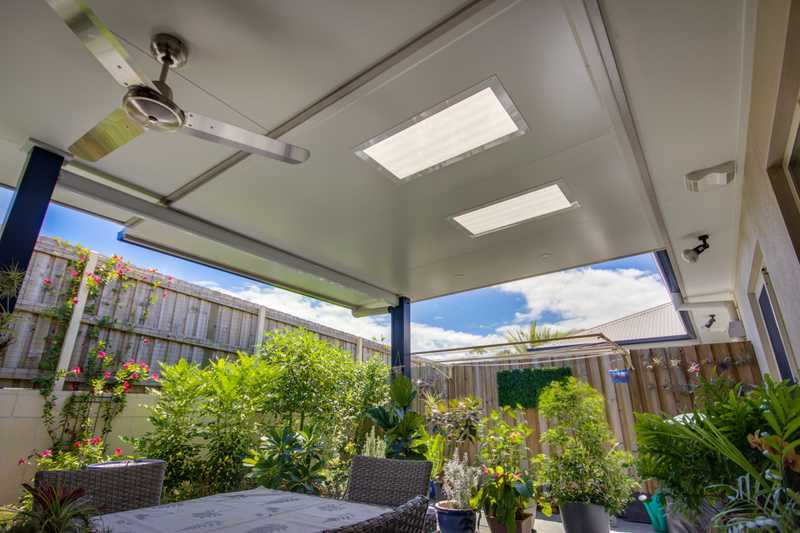
Planting small trees in artistic pots adds a lot of charm to any deck landscaping design, especially if you don’t have much fresh ground to work with. Potted trees can serve as important distractions from bare walls or other objects you don’t want your guests to notice. You can also use them as visual partitions and for added privacy.
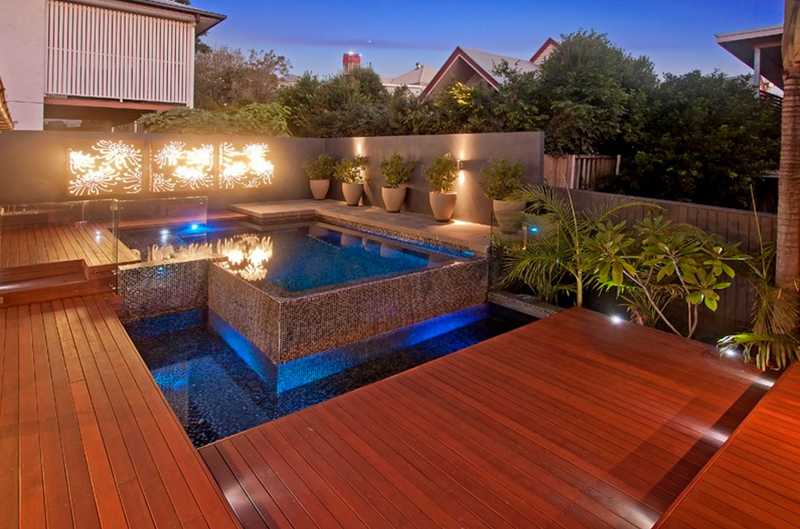
Look for plants that will be suitable for the available sunlight and an appropriate mature size. They should be compatible with the local climate and have manageable root systems and maintenance requirements. It’s important that they have non-invasive growth, are safe around children and pets where relevant, and are suitable for pots if they’re being container-grown.
Consider the vision you have for your deck:
For colour: flowering plants and seasonal colour.
For greenery: foliage plants and shrubs.
For privacy: screening plants or taller container plants.
For small spaces: compact plants, vertical gardens and pots.
For a tropical look: suitable Queensland tropical/subtropical plants.
The most common mistake in landscaping around a deck is using plants that are too large and crowd out precious square footage. When choosing plants for your deck design, check heights and diameters at maturity. You shouldn’t need to spend hours pruning and clipping to prevent a plant from taking over your space.
A plant that looks appropriately sized when purchased can become much larger as it matures. Consider:
Although some plants with thorns, spines and sharp leaves are very beautiful, they don’t work well when located near decks. Succulent plants like the agave can bring a unique look to your outdoor spaces, but many have potentially painful spines on their leaf tips. These can rip clothing, scratch legs, and worse in certain scenarios. Be very careful about planting these painful plants. Roses, holly and cactus are the most common troublemakers.
Not only do oversized pots stand out as an eyesore around your deck, but they are also very difficult to manoeuvre when needed. You should always be aware of the combined weight of the soil, pot and plant, not just the weight of the pot itself. Use wheeled platforms when possible. Remember, you may need to move your plants for protection during weather events.
Plants may be unsuitable if they have:
It’s easy to get too excited and make errors when designing your dream deck. Homeowners should avoid:
You can combine a range of popular options:
Before choosing plants or landscaping features, ask:
☐ How much sun does the deck receive?
☐ How much privacy do I need?
☐ How much maintenance do I want?
☐ How large will each plant become?
☐ Where will water drain?
☐ Will large pots be too heavy?
☐ Do I need screening as well as plants?
☐ Will landscaping block airflow?
☐ Does the design leave stairs and pathways clear?
☐ Are the plants suitable for children and pets?
☐ How will the garden look when the plants mature?
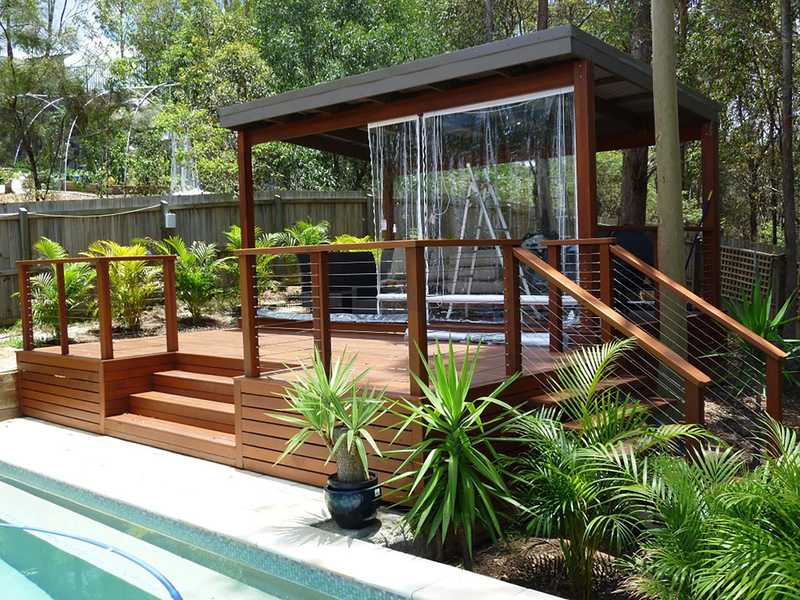
Landscaping around your deck should be a fun process that brings out your creative side. Just be careful to keep all of these factors in mind when making decisions. Follow these dos and don’ts, and you’ll be enjoying the beautiful setting around your deck in no time!
Here at DeKing Decks, we’d love to help you create your dream outdoor space. Landscaping is such an important part of the overall deck design, including the position of stairs, screening, garden connections and entertaining areas. We can help you bridge these factors to create the perfect deck.
**DeKing Decks service Brisbane, Redlands, Bayside, Logan, Ipswich, Moreton Bay, Gold Coast, Lockyer Valley and Scenic Rim **
See our average cost to build a deck with or without a patio.
Use our Patio Roofing and Deck Calculator to get a more accurate estimate.
For more information contact Deking Decks
Good options for privacy-focused landscaping include:
– screening plants
– potted trees
– vertical gardens
– decorative screens
– timber slats
– louvres
– outdoor curtains
– a combination of plants and built screening
For structural integrity, you need to consider combined weight, where the planter is positioned, drainage, water runoff, deck structure, access for moving the planter, and whether the pot could damage the decking surface.
Design is so important when building a deck and landscaping around it. You want your outdoor space to flow seamlessly. This means looking into stairs and pathways, garden beds, potted plants, the lawn, and low-level planting. You should also consider matching colours/materials between the house, deck, and garden, and incorporating strategic lighting.
Yes. Dense plants, screens and enclosed landscaping can reduce airflow depending on their placement.
Privacy and greenery can be balanced with open areas that allow air to move through the outdoor space.



 Quote Calculator