Last Updated: August 2026
Eco decking is a practical, low-maintenance option for extending the outdoor living space of tiny homes, cabins and caravans in Queensland.
Also known as composite decking, eco decking can provide a durable outdoor area for entertaining, relaxing or everyday use without the ongoing maintenance associated with traditional timber decking.
For tiny homes and other compact living spaces, every square metre matters. A thoughtfully designed deck can create valuable additional living space without requiring a large footprint, while composite decking offers a range of design options suited to Queensland’s hot, humid and often wet conditions.
Let’s explore why eco decking can be a suitable choice for tiny homes, cabins and caravan spaces, including its versatility, durability, appearance, and low-maintenance characteristics.
Let’s look at why eco decking, also known as composite decking, is the perfect solution for tiny homes, cabins, and caravans. From its durability to its environmental benefits, this versatile material offers a range of advantages for small-space living.
One of the greatest advantages of eco decking for tiny homes, cabins, and caravans is its versatility. Compact living spaces require careful design choices, and decking can help expand your usable area by creating an outdoor extension that feels like part of your home. With eco decking, you can install a small deck that adds functionality without overwhelming the space.
Because eco decking can be cut to custom sizes and shapes, it’s ideal for unconventional layouts or tight areas. Whether you want a small front porch, a side deck, or an outdoor seating area, composite decking can be tailored to fit your needs while maintaining an aesthetically pleasing appearance. This allows tiny homeowners to maximise outdoor living in even the smallest of spaces.
When it comes to decking for tiny homes or caravans, weight is often a concern. Traditional timber decks can be heavy, adding unnecessary strain to the overall structure of your home or caravan. Quality eco decking is typically much lighter than natural wood, making it a better choice for small, transportable homes where weight considerations are crucial.
Composite decking is also typically easier to install, which is especially beneficial for DIY enthusiasts who are building their own tiny homes or cabins. With its simple interlocking system and lightweight boards, eco decking can be quickly installed with minimal effort.
For tiny homes, cabins, and caravans, durability is essential. These homes are often located in remote or off-grid areas where maintenance may not be convenient. High-quality eco decking is known for its durability and ability to withstand the elements, making it an ideal choice for outdoor living spaces in various climates, including the hot, humid, and rainy conditions of Queensland.
Unlike timber decking, which requires regular sanding, staining, and sealing to protect it from weather damage, our eco decking is close to being maintenance-free. It’s resistant to rotting, splintering, warping, mould, mildew, and pests. A quick clean with soap and water is all that’s needed to keep it looking great, saving you time and effort.
It’s perfect for homeowners who prefer a “set it and forget it” approach to deck maintenance.
As the name suggests, eco decking is an environmentally friendly alternative to traditional timber. Made from a combination of recycled wood fibres and plastic, eco decking helps reduce the demand for new timber and decreases the amount of plastic waste that ends up in Queensland’s landfills. It’s also designed to last much longer than traditional wood, reducing the need for replacement materials and contributing to a lower environmental impact over time.
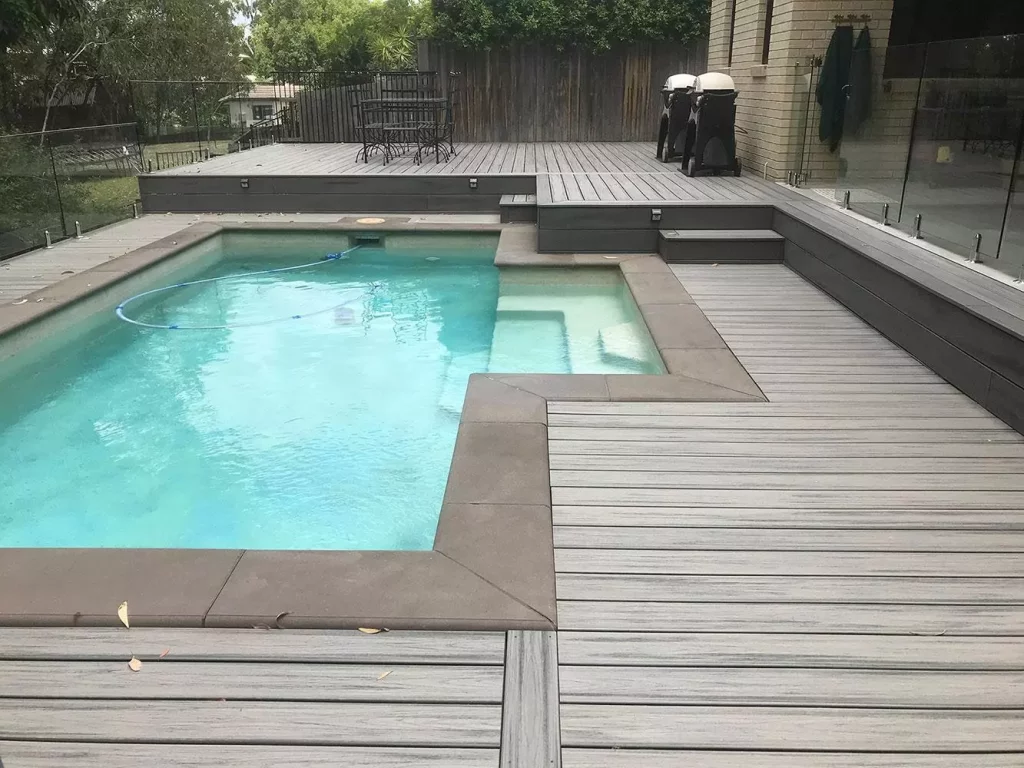
Just because you’re living in a small space doesn’t mean you have to compromise on style. Eco decking comes in a wide range of colours, finishes, textures, layouts and arrangements, allowing you to choose a design that suits your aesthetic preferences. Whether you want a modern, sleek look or a more natural, wood-like appearance, eco decking can deliver the perfect finish for your outdoor space.
Living in Queensland means being mindful of pests like termites, which can cause significant damage to wood over time. Also, particularly in coastal or rainforest areas, we’re prone to moisture and therefore rot.
Traditional timber decks are vulnerable to both, but the high quality eco decking used by DeKing Decks is resistant. This makes it an ideal choice for tiny homes, cabins, and caravans, where long-term durability is a priority.
For high-quality eco decking installation, reach out to DeKing Decks today. We specialise in creating beautiful, sustainable outdoor spaces that meet the needs of small homes and tiny living enthusiasts.
DeKing Decks service Brisbane, Redlands, Bayside, Logan, Ipswich, Moreton Bay, Gold Coast, and Sunshine Coast
See our average cost to build a deck with or without a patio. Or, use our Deck and Patio Roofing Calculator to get a more accurate estimate.
Yes. One advantage of a professionally designed deck is that it can be planned around the shape and constraints of the existing building. Composite decking boards can be incorporated into a range of layouts, although the supporting structure and installation requirements need to be considered.
Eco decking can be used to create an outdoor living area around a caravan, although the design needs to consider whether the caravan is permanently positioned or needs to be moved. The deck’s structure, access and installation method should be planned around the caravan’s specific location and use.
Composite decking can be suitable for coastal locations, but the specific product and installation method should be selected with the local environment in mind. Exposure to salt, moisture, sunlight and weather should all be considered when choosing decking materials and fixings.
Yes. A tiny-home deck can be designed to incorporate features such as built-in seating, outdoor furniture, privacy screening or other elements. Planning these features at the design stage can help make the best use of a limited outdoor area.
A deck can be designed to improve access to a tiny home, although the appropriate design will depend on the building, site and intended users. Considerations may include entry points, deck levels, ramps, transitions and available space.



 Quote Calculator