Last Updated: July 2026
Once the weathering process is complete and you’re ready to treat your timber deck, the next big question is: Which treatment should you use?
Deck treatments generally come in two varieties: oils and acrylics. At DeKing Decks, we always recommend using acrylic decking treatments, and in this blog, we’ll discuss why.
What is the Best Treatment for Wooden Decks?
Congratulations! You’ve just had a beautiful new deck built, and you’re probably eager to get it looking its best. So, what’s next?
Wait…
6-8 weeks of weathering is required before you can successfully apply a decking treatment. This is to allow the natural tannins to leach out of the timber so the treatment can adhere properly.
Timber contains natural oils called tannins, particularly in hardwoods like Merbau or Spotted Gum, which are popular in Queensland. These tannins need time to leach out of the wood, and if you apply a finish too early, the tannins may prevent the treatment from adhering properly. This could lead to patchy finishes or require frequent reapplications.
The weathering process allows these oils to escape, ensuring that when you do apply your chosen decking treatment, it sticks properly and lasts longer. If you’re impatient, there are products that can help speed up this weathering process, such as Powerlift from The Flood Company or Powerwash from Intergrain, which can prepare your deck for treatment sooner. Alternatively, regularly hosing off your deck with clean water will also aid in speeding up this process.
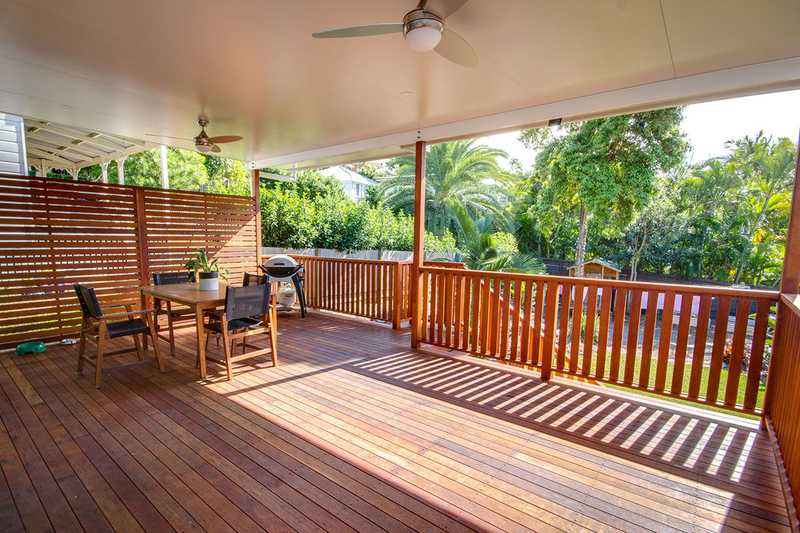
One of the biggest benefits of acrylic decking treatments is their eco-friendliness. Acrylic finishes are water-based, meaning they contain fewer harmful chemicals than oil-based treatments. This makes them a more environmentally responsible choice, especially for homeowners conscious of reducing their environmental impact.
Acrylic treatments are also much easier to work with. They can be applied more quickly than oils and dry faster, allowing you to enjoy your deck sooner. Acrylics also tend to penetrate more deeply into the wood, creating a stronger protective barrier with less effort.
Acrylic decking treatments come in a wide range of colours, giving you more options when it comes to customising the look of your deck. Whether you prefer a natural wood finish or a more dramatic, contemporary colour, you’ll have plenty of options to choose from with acrylic treatments. Oils, on the other hand, are usually limited to shades that enhance the wood’s natural tone, providing less flexibility.
Cleanup is a breeze with acrylic treatments. Because they are water-based, you can clean your brushes and tools with just soap and water. Oils require harsh chemicals for cleanup, making the process messier and more time-consuming.
Perhaps the most significant benefit of acrylic decking treatments is their durability. In Queensland’s extreme weather conditions, acrylics last three to five times longer than traditional oil-based treatments. Acrylic finishes provide better UV protection, preventing your deck from fading and cracking in the sun. They also offer superior water resistance, helping to prevent moisture-related issues like mould, mildew, and rot.
Contact us today to learn more about our decking solutions and start your journey towards a more beautiful and sustainable outdoor space!
You can, but be very cautious. High pressure may splinter or damage the wood. Hosing down and using gentle soaps can be effective for the pre-treatment clean.
It is generally not recommended. Paint sits on top of the wood and is prone to peeling and cracking under heavy foot traffic and changing weather.
If you notice water soaking into the wood instead of beading, or if the wood is beginning to look grey and faded, it is time to re-treat.
It’s best not to. Direct sunlight will cause cleaning solutions and stains to dry too quickly, which can leave white residue, patchy colouring, or prevent the treatment from penetrating the wood. Choose a mild, overcast day with no rain expected.



 Quote Calculator